
Useful Info
Physiotherapy at its best! See some useful information and frequently asked questions below.
Useful Info
Do I need a referral to come to physiotherapy?
No, most medical aids do not require a referral from a doctor to see a physiotherapist. If you are unsure however, please enquire from your medical aid. A referral from your specialist or general practitioner is necessary if you have been injured at work (IOD).
We are also able to refer you to other medical professionals if necessary.
Do I need to bring anything or wear anything in particular?
Bring any x-rays or scans that are relevant to your condition or injury and the referral letter (if applicable). Wear comfortable clothing if possible. Remember that the painful limb/part of your body will need to be exposed for proper evaluation and treatment to be carried out.
How long does a treatment take?
A consultation normally takes approximately 30 minutes to an hour. The first consultation normally takes an hour for a comprehensive evaluation and treatment to be carried out. If you want to have multiple areas assessed or are experiencing a complex problem, please inform our reception staff upon booking. Follow up consultation will take approximately 30 – 45 minutes.
New patients should please arrive 10 minutes prior to your appointment time to allow time to fill in a new patient information form.
Do I need to pay for the visit at the time?
- All treatments are claimed through the medical aid at medical aid rates. If you do not have available funds, it is your responsibility to tell the receptionist or physiotherapist and you will be required to pay after each consultation. If you are in a self-payment gap, the account will be sent through to your medical aid and you will be informed of the outstanding balance.
- Private patients need to pay after each consultation.
- An initial levy is payable upon the first visit only.
- Card facilities are available.
What is chronic pain? How can physio help?
Pain is a normal human experience, but when pain persists it becomes a big issue for the patient and healthcare professional.
Chronic pain is a condition that occurs when the brain concludes there is a threat to a person’s well-being based on the many signals it receives from the body. This condition can and often does occur independently of any actual body tissue damage (due to injury or illness), and beyond normal tissue healing time. It is very important to realize persistent pain is more likely a PAIN PROBLEM than a TISSUE PROBLEM. Once the tissues heal and tests show little to no major issues, focus should be placed on better understanding PAIN.
Chronic pain, represented by conditions such as low back pain, fibromyalgia and osteoarthritis, has recently been highlighted as one of the most prominent causes of disability worldwide by the Global Burden of Disease reviews. Chronic pain has been linked to restricted mobility, opioid dependency, anxiety, depression, and reduced quality of life and productivity, as well as an increase in medical costs. More people are affected by chronic pain than by heart disease, diabetes and cancer combined!!
Our Pain Education Empowerment Programme (PEEP) is designed to help people dealing with PAIN PROBLEMS. We offer individual programmes, as well as group classes for chronic pain sufferers.
Kinesio taping, Dynamic taping & strapping
Kinesio © Tape (the normally brightly coloured tape) was developed in Japan in 1973 by Chiropractor Dr Kenzo Kase. Dr Kase wanted to treat his patients and then send them home “with his hands still on them” by allowing the tape to continue the treatment. Kinesio tape is extremely versatile in its ability to re-educate the neuromuscular system, reduce pain, optimize performance, prevent injury and promoting lymphatic flow and healing. It is latex free, long lasting (can stay on up to 5 days) and water resistant. It takes very little time to apply and is suitable for patients of all ages and can be used for various different conditions. Although it is commonly used by athletes, 85% of the taping applications are for non-athletic purposes.
Dynamic Tape (Tattoo tape) is a 4-way stretching tape with strong elastic recoil. It absorbs force to reduce the workload on the body. Taping methods aim to directly manage load, modify movement patterns and assist function. It can be applied to support fatigued or injured body parts, or to improve technique while still allowing 100% range of motion.
We also do general strapping and taping for prevention of injury and during the recovery phase of rehabilitation, as well as postural strapping.
What is Pilates?
Pilates, pioneered by the late Joseph Pilates (1880-1967) is a method of exercise and controlled movement designed to stretch, strengthen and balance the body. Pilates, a German-born athlete, developed his concepts in the early 1900’s after 20 years of self-study and apprenticeship in yoga, gymnastics, and Roman and Greek conditioning programs. He discovered that his conditioning techniques could help his clients prevent injury and improve strength while maintaining long, even muscle tone.
BASI (Body Arts and Science International) Pilates TM, the method we teach at our practice, is an anatomical approach to the original method incorporating modern exercise science and rehabilitation principles which emphasizes neutral alignment, core stability and peripheral strength and mobility.
Pilates is ideal for everyone from young adults, post-rehab patients to elite athletes and is a great compliment to cardiovascular exercise, athletic training and rehabilitation. We also use Pilates principles for rehabilitation after orthopaedic and spinal surgery as it is the ideal method to improve strength and alignment and reduce muscle imbalances.
What can I expect to feel after treatment?
Following treatment, symptoms are usually relieved, and patients should feel an overall improvement. It is however completely normal to experience post-treatment soreness. Don’t be alarmed if this happens remember that the therapist probably stimulated the structures that are causing the pain. Please follow the physiotherapist’s advice and inform him/her of any symptoms post-treatment as this will help grade the intervention during the next visit.
What is my role in treatment and recovery?
Patient compliance and active participation in rehabilitation is one of the most important factors in your treatment and rehabilitation process. We follow a goal-focussed approach to treatment where both the physiotherapist and patient determines what the goals for treatment are. It is very important that you do any home exercises and stretches given to you and follow your post-op and post-treatment instructions to ensure optimal outcome. Please ask if you are unsure about any instructions or exercises.
Do we treat Injury on Duty (IOD) and Road Accident Fund (RAF) injuries?
Yes, we do treat IOD injuries, but please be aware you will still be responsible for the account if the claim is not accepted by the commissioner or only part of the account is paid. Please bring along a certified copy of your ID document, referral letter from the doctor, payslip, first medical report (WCL4) and employer’s report of accident (WCL2) to your first consultation. These documents are required to obtain authorisation for your treatment and we can not commence with treatment without them.
Road accident fund treatments will need to be paid by yourself after each consultation and claimed back from the road accident fund. We do write medical reports for lawyers on request and at an extra charge.
Is dry needling the same as acupuncture?
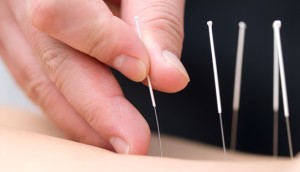
No. Dry needling is used to elicit a natural healing response from your body, by increasing blood flow to specific structures, and stimulating your body’s natural pain inhibition system. It does not carry the spiritual baggage of acupuncture and is based on scientific research.
Dry needling targets muscle tissue, and its nerve connections, so any conditions where muscle pain or tightness is an issue could potentially benefit. This may include such things as neck tension, headaches, back pain, tennis elbow, ITB friction syndrome, shoulder conditions or shin pain and even sinusitis. Dry needling is very safe for most people (it should not be used during pregnancy, or in a few other medical situations). The needles are very fine, and you barely feel them go in. Once the needle is in, people sometimes feel some aching; others feel not much at all. On occasion the needle may cause a small muscle twitch, which is a great sign that the needling will have a positive effect on relaxing the muscle.
Not all conditions require dry needling. The decision rests upon the physiotherapist and patient. The therapist needs to assess that the therapy is suitable to the condition, and the patient needs to be willing to participate after being informed about the procedure.
What is the difference between a physiotherapist, massage therapist & biokineticist?
Physiotherapists are trained to treat pain and pathology. The treatment is based on a complex evaluation and accurate diagnosis. Massage is only one of the treatment techniques used by physiotherapists. We use a variety of patient specific treatment techniques to treat injured soft tissue, joints and/or nerves. At times anti-inflammatory & pain relief treatment may be required, which includes things like ultrasound, laser, deep oscillation therapy and other electrotherapy modalities. Functional rehabilitation, which include graded exercises and education are always included in treatment. Once the pain and pathology have been resolved, a biokineticist can assist in further strengthening and final rehabilitation.
Complex Decongestive Therapy (CDT) as treatment for lymphedema?
Lymphedema is a chronic (long-term) condition in which excess fluid (lymph) collects in tissues causing edema (swelling) due to either removal of lymph nodes, radiation to lymph nodes or blockage of the lymphatic system. The lymphatic system is an important part of our immune and circulatory systems. Lymphedema commonly affects one of the arms or legs (or both), but can also occur in the face, trunk, abdomen or genital area. Lymphedema is a progressive condition and can be very debilitating. The condition will not disappear by itself and it is imperative that you get treatment should you be affected by it.
Complete Decongestive therapy, (also called Combined, Complex or Comprehensive Decongestive Therapy), all refer to the same method known as CDT. CDT is the main treatment for lymphedema and it has been shown to be safe and effective. It consists of an initial reductive phase that lasts about 2-8 weeks, followed by a maintenance phase that is an ongoing, individualized self-management phase to make sure the gains of Phase I are maintained long term. CDT aims to decrease swelling, increase lymph drainage from the congested areas, reduce skin fibrosis and improve the skin condition (thus reducing the risk of cellulitis) and improve the patient’s overall quality of life.
We also do post-surgical lymphatic drainage and deep oscillation therapy, which has shown to markedly reduce healing time and swelling, as well as improve mobility and recovery post-surgery.
Please specify if you are making an appointment for lymphedema/ decongestive therapy as this consultation takes longer than a regular session!!
“We believe in a patient-focussed multi-disciplinary approach to
restore your highest level of function & get you back to living a full and
active life”
Get in Touch
Appointments: 063 034 5241
Account enquiries:
Please contact OVOCARE on 011 768 3725 / vcphysios@gmail.com
583 Besembiesie Rd, Magalieskruin, Pretoria.